Showing posts with label short story. Show all posts
Showing posts with label short story. Show all posts
Wednesday, July 8, 2009
steampunk project (project #2).
Our Sci-Fi project has officially ended and we have all been pleased with what we have come up with. As our next project, we have decided to do a Short-Story in the genre of Steampunk. Steampunk is classified as ANY genre with the added ingredient of industrial presence. For example, the movie Wild Wild West is a Western in the genre of Steampunk. Our project will be single space 12 font up to five pages long, and we will not share our exact stories with each other in order to secure originality. Who knows? We may get a fantasy, alternate history, and western from tyhe three of us but all in the genre of Steampunk. So! Have fun and check back from us. We will be posting our stories as soon as Nick gets back from Chicago, so it'll be a few weeks. Keep checking back though! Thanks! -Adam

Saturday, July 4, 2009
multiply.
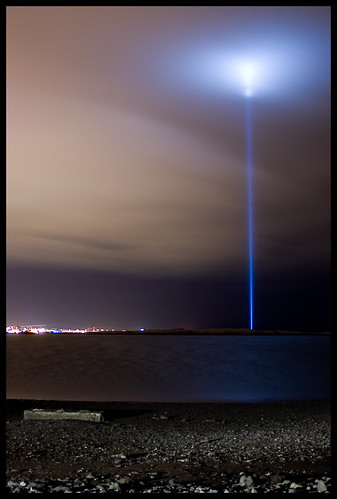
The clouded skies reflected upon the aviators swerved like a gelatin in the tinted glass, and the leather glove tightened around Dimitri’s hand as his fingers curled around the handlebar. Gravel and dust from the New Mexico desert blemished the empty freeway and traveled along with the force of the storm’s wind. Dimitri studied the long straightforward road from behind his aviators. His short black hair tousled with the rushing breezes; his brown jacket waved as well, and as the Harley ’94 peaked 120 mph the storm began to pick up momentum.
A gust of cool wind from South of the desert had begun to travel towards Dimitri, picking up grains of dirt and pollen, and neared closer and closer until it struck a significant blow. Dimitri struggled with the motorcycle. He clenched the handlebars amid his gloved hands, and maneuvered the vehicle back on path. With careful thought, he anticipated more impact from the storm’s wind, and was more cautious to the handling of his drive.
He turned his head to the right where most of the dark clouds had formatted. The motorcycle’s engine continued to purr as it journeyed passed more and more road, but suddenly the noise began to rupture. Brief moments of failure began to interrupt the consistent engine.
“Perfect.” Dimitri shifted his head back towards the road, and glanced over at the gauges in the dash. Nothing of alert was being noticed by the car.
Then, the stalling began to take its course. The pauses took longer; the engine made effort to continue the steady path, but to no prevail. Gently the vehicle began to decelerate, and the orange indicator on the speedometer declined. 120...110...105…
“Thanks, Grandpa,” Dimitri said to himself, “you sure have a way with bikes.”
Dimitri pulled to the right shoulder of th
 e long deserted road, and coiled his fingers upon the brakes. The rugged black motorcycle came to an easy halt, and Dimitri mounted off.
“Least it’s rainin’,” he looked up at the gray sky. Raindrops landed on his tinted lenses. As he wiped his aviators clean, Dimitri ambled to the item compartment on the back of the motorcycle. He unlocked the tiny stainless steel box–sprinkled with rain–and opened the compartment. Inside, spare pistol bullets, an August issue of Maxim, a folded miniature atlas, and a picture displaying a young girl with black hair was placed.
He took the tiny picture and gazed at it. A nostalgic wind gusted through the desert highway now, yet it remains a mystery what emotion was felt behind Dimitri's aviators. Soon enough, the storm’s rain began to land on the photo, and, as a cue, Dimitri pocketed the picture, picked up the tiny atlas, and unfolded it.
“Come on, little map,” whispered Dimitri; a violent bolt of lightning crackled in the background, “find me a Texaco.”
As he searched down the highway lines in the map, the rain began to fall harder. A sudden urgency filled the atmosphere, and the raindrops grew heavy. They parachuted down from the skies on Dimitri, falling and picking up speed. They began to freeze and crystallize in the sky. Hail. Suddenly, Dimitri was bombarded by a fleet of descending ice. He used the atlas to shield his head from the plaguing hail, but another torrential gust swept it away. The atlas now traveled through the air, manipulated by the behemoth winds, and was sent zig-zagging across the emptiness and dull dirt of the desert land.
Dimitri, realizing that the atlas was his only aid of direction, chased after the escaping map. His leather shoes imprinted the ground with the pattern on the soles. Shocks of pain from the hail hindered his balance, and Dimitri fell to the hard, damp ground, but stumbled back quickly to his feet. In pursuit–and in pain–he was cautious of what occupied the floor to prevent tripping again. Then, a cataclysmic, intimating boom that ravaged all noise with such amplitude bewildered Dimitri, and he fell once more. This time, leaving the atlas to lose itself amongst the wind.
Dimitri's energy was almost completely gone. It took effort to raise his face from the rough desert dirt. Veins in his neck pulsated as he raised his head, and he began to scan the clouded sky–with great difficulty due to the hail–for the map. Through his aviators, he frantically searched for his atlas, but aborted when his eyes constricted to the sight of the marvelous blue glow. A thick, jurassic, glowing obelisk of blue light fell from parted gray clouds seeming to land a few miles in front of Dimitri.
That must have been what caused the boom, Dimitri thought. The hail seemed to have calmed now, and the storm seemed less violent since the glowing rod surged from the sky. Nothing was left but the silence of awe and wonder.
As he laid there, galvanized by the unearthly marvel, aggression was evoked in the winds once more. This time with a more vicious strength. The winds began to pillage the once-tousled hair, and ransack the brown jacket. Then, the unscrupulous force physically began to violently drag Dimitri towards the beam. He skidded across the rough ground trampling dead cacti and empty carcasses. The bare skin behind his clothes were scraping against the irregular surface of the desert; pieces of skin dislodged and left open, painful, bleeding wounds.
He was being pushed closer and closer to the obscuring beam. Every now and then, he would skid on the heels of his shoes in an attempt to brace himself from the forcing motion with no use. Dimitri was closing in on the root of the beam. The aviators helped him see through the bright mystic azure glow, and as he was so close to the mysterious gargantuan light that he could almost touch it the wind halted, and he plummeted to a stop.
Once again, he stumbled back on to his feet, and was just arms-length away to the radiance. Curious to how the light must feel, Dimitri raised his finger and neared it towards the light.
“I would not touch that,” a booming voice commanded from behind Dimitri.
He turned in fright, focusing his eyes through the lenses, and searched for the voice.
“Where are you?” Dimitri yelled towards the emptiness.
“Behind you,” the voice sounded closer to Dimitri’s ear now.
Dimitri turned again quickly, and came face-to-face with a blue-eyed man.
“Who are you!” Dimitri shouted.
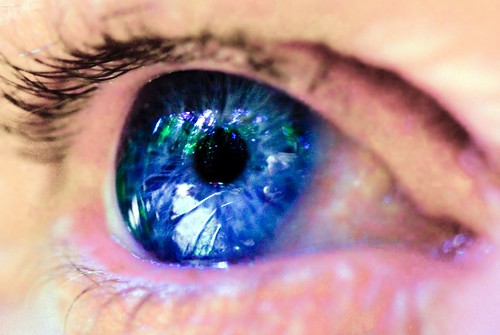
“There is no need for exclamations,” the man said, calmly, “I promise you. We–”
“We?” Dimitri interrupted as he gathered his breathe. “There’s more of you?”
“Yes,” he smiled, and his blue eyes lit up, “And we come in peace.”
Dimitri gathered his speeding thoughts, “Talk about cliche.”
A wrinkled smile formed on the mysterious man face. He held up a feeble hand towards Dimitri, “I can explain more, human. Please, take my hand.”
Dimitri’s irregular breathing grew hotter with frustration. He glared at the man’s hand, “What?”
“My boy, take my hand so I may show you.”
“Get the heck away from me,” his voice melted with spite, “I don’t know who you are.”
“I can explain all in due time–”
“I don’t know where you’re from, I don’t know what this whole blue-light thing is.”
“My boy–”
“And I’m sure as hell not holding your hand, old man!”
“Son,” the man with the blue eyes put his hand on his shoulder, “you’re delusional.”
“I said get the he–”
Suddenly, a bright blue, blinding flash of light filled the entire setting. A rush of motion passed through Dimitri's finger tips. His stomach rose to his throat and churned with the feeling. The ground from underneath his feet was gone, and Demitri felt as though he was falling and standing simultaneously. Then, abruptly, a wave of black darkness flooded Dimitri's eyes. He felt gone.
* * *
“Man, Stanley, this storm is crazy. Sure would hate to be the guy caught in this rain,” a regular said within his stool. He grasped his cold mug of foaming beer in his hand, and sipped the cold alcohol. “Anything on the news ‘bout it?”
“Let’s check.” The bartender turned the dial on a dusty television set on a shelf. The screen lit up, and the local news casting program was on.
“That’s right, Robert. A class-five state of emergency has been called here at New Mexico,” the woman on the television reported.
“Hah, state of emergency! I laugh at the silly folk who are afraid of a lil’ rain,” the bartender smiled.
“Now hold on there, Stan, I have kids at home,” the regular’s eyes widened with fright, “Has New Mexico ever gotten hit by a hurricane?”
“No, stupid, we live in a desert! There’s no water here!”
“What about tornadoes? What about earthquakes!”
“Sush it, Kevin!” the two looked back up at the television. Footage of a massive crafts hovering above the sky had been playing since. The grainy amateur capture caused the colors of the clouded sky and the crafts to blend in, making it hard to differentiate. Towards the end of the footage, the cameraman points the camera straight up to see a craft incredibly close to the ground. He scans the craft with the camera, and focuses in on a hole aligned to where he’s standing. Suddenly, the hole lights up with the ominous blue glow, and the camera is dropped.
“Once again, that was disturbing footage from earlier today in Cancun, Mexico,” the television announced.
Suddenly the television interrupted the news broadcast. A strange blue logo that looked like skull was displayed for a brief two seconds. Then, an elderly looking man with glowing blue eyes was facing the screen.
“Wow, he sure does look strange, Stan,” said Kevin.
“Must be the Japanese again…” said the bartender.
“We mean no harm, Earth,” the voice boomed from the television, “and on behalf on the Velascian race, we apologize for interrupting your inferior human activities. My name is Threon, I am chief linguistic of my people. We have studied your planet’s language, culture, and weaknesses in order to save it.”
“I don’t think these are the Japanese, Stanley…”
“Reoccurring trends in the galaxies ionic patterns suggest that your planet is conflicting its very existence with another paralleling planet. To put it bluntly, your all going to die.”
“This guy’s serious…”
“Worry is unnecessary. We have already taken precautions to preserve the human race.”
“Drink up, we’re gonna need it.”
“We have chosen two members of your race that inhibit all the traits of high-quality reproduction systems to multiply. One male by the name of Dimitri Escon, and a female by the name of Veronica Esquet. The two are with us. You have three minutes to live. Goodbye.”
The television fell silent. The entire bar fell silent. Only the two men inhabited the restaurant, and they each silently took the news in. After a few seconds, the bartender took the mugs, refilled them, and handed one to Kevin.
“To us,” Stanley raised his mug for a toast.
“To us.”
xetragade.
So this is my first Sci-Fi type short story that I have ever written. It is not your stereotypical Sci-Fi in the sense that the only real Sci-Fi feel you get is the fact that it's in the future and there is a mention of robotic technology. Everything else is what it is like today. This project did not take me as long as I thought it would and I had a TON of fun working on it. Please enjoy, and let me know what you think!
Xetragade
By Adam Gonzales
 The deep movements beneath the murky water sent soft ripples across the glassy pool. The Dutch spectators leaned forward in their seats trying to get a better view of what was held in the slick fiberglass-enforced tank, clutching the bottom of their seats until their knuckles throbbed white. The churning bubbles that flitted across the top of the almost black water were eyed by the many rows of families and business men that filled the cold white bleachers. A sudden loud beep rang through the air and continued at a steady pattern of exactly thirty beeps per minute, but the spectators did not even so much as bat an eyelid. Probably they were too engrossed in what lay at the bottom of the pool, but it was shocking still that they seemed so unfazed by the abruptness of the strident noise. The sky was orange and dusty, and despite the hollow rushing of the wind and the precise pattern of the beeping, the crowd remained absolutely silent. Time put itself on hold as the half-eaten bags of popcorn and hot dog wrappers fluttered slowly beneath the feet of the seemingly lifeless audience. Even the children, usually restless and bursting with uncontrollable energy, had been tamed by the moment; their eyes dark and wide, locking onto the calm surface of the glossy water, waiting for Xetragade to show itself.
* * *
The scientists at Muiden Harbour had been busily piecing together the mystery that was Xetragade for years. Hidden under the tourists’ noses within the walls of a small warehouse near one of the docks, the scientists had poised secrecy with productivity. Although the government had established the testing to last only three years, the Xetragade Initiative proved to be difficult to assemble correctly and was thus granted an extended ten year development plan. It was not long before the rusty warehouse walls were replaced by the slick white of the plexi-steel, and that the testing facilities were moved under the new ocean theme park that was being erected. Not that the scientists objected; it was quite fitting. For Xetragade to be accumulated under an ocean park was nothing short of ironic. The scientists knew that they would be able to experiment on the tourists above without their knowledge by placing slight traces of various serums within their purchased drinks, and without any harm. So when the park was erected, they made sure to attract as many tourists as possible. Everything in Muiden was perfect. Everything in Holland was perfect. And nothing could hinder the progress of Xetragade.
Then there was the announcement of Holland’s resignation from the U.N. At first it came as a shock that could barely be compared to anything that had happened before to the Dutch people. But when the rest of the U.N. slowly followed suit, the people of Holland quickly shifted their emotions from astonishment to fear. There had been rumor of an international epidemic, but mostly it was thought to be gossip and propaganda. The U.N., acknowledging some sort of viral scare, had apparently decided that due to the evident chaos that was going to flood the world, it was only right for each country to focus on their individual survival. Media buzzed, people yelled, but still there was no answer to the question that rang in everyone’s mind: what was the epidemic? Government officials had mentioned little about what was suspected to be the threat, but many had whispered something about the fish. To the people of Muiden, Holland, fishing was a way of life. So when word spread that the cause had been aquatic, there became a steady decline in the market. Not that it mattered; the decline in the market simply reflected the decline in government stability. Confined trepidation was soon shifted into uncontrollable bedlam as more and more of the Dutch people found themselves wondering if they would make it through the night alive.
It was not long before world officials declared the Viral Rotsje Epidermal Piscus Virus, or VREPV, the cause of the mass panic. Although the origins of the virus were not detrimental to humans, it had been discovered that the German authorities had been developing viral weapons using different viruses ten years prior, including VREPV. Originating from a fusion between the non-lethal Viral Hemorrhagic Septicemia Virus and the deadly Toxic Epidermal Necrolysis, VREPV was incurable and impossible to destroy. At first it had been confined to the workspace of the German scientists, but after the government’s disbandment of the test facilities, it had been discovered that the viral experimentations had been tossed into the North Sea, where both Holland and the U.K. received their main supply of the fish market. Trade between the U.K. and the rest of the world ensured that the infected fish in the North Sea were globally expanded. Smaller landlocked countries that did not necessarily find themselves in the fish market, such as Hungary, Botswana, Nepal, and Paraguay were more or less safe until the Spread of 2026. At first only the countries that bordered the ocean had been affected—it was not until later when the virus was discovered to be transferable by touch that landlocked countries had been receiving massive breakouts via human hosts. It was spreading, and it was spreading fast.
 Skin rotted throughout the world, no one was safe. Controlled news broadcasts stated that the rotted skin flakes in the air could dissolve and travel on the air currents from place to place. At night government trucks would sweep the streets, spraying disinfectant into the air. It was a futile attempt, as everyone knew it was, but the presence of the government kept families from giving up entirely. Time went on and slowly the population began to dwindle. Soon every door remained locked, every window chained. The brave could be seen making fast trips to general stores in search of clean food and clothes. But, as it always does, the inevitable stuck loud and hard. Every family, every businessman, every government official of Holland found themselves slowly shedding their skin. The point of fear and panic had faded into grim acceptance, and the streets were soon filled with a silent huddled mass of a dying people. No one talked—no one saw the point. There would be an occasional gurgle of laughter from a small adolescent on the street, but it would quickly fade away when the child peered into the lifeless eyes of his elders. The only sense of life came from the caw of the birds in the sky and the desperation for clothes. Clothes were they only comfort that the people had; it was thought that it could be possible that if one was protected by clothes that their skin would stay intact longer—failed attempts at menial security, definitely, but it was all that the people of Holland had.
The people began to become more and more lethargic, until they were so lackluster that they did not even notice the government’s disintegration. Everyone was still human, but there was no life left in their eyes. Quiet spread across the world and the only thing keeping the human race from becoming extinct was the sole fact that the disease took months to completely devour a human host. The pain had become so customary that the only acknowledgment that the people showed of it was their habitual scratching and peeling of the skin. Many of the people of Holland had retained normal cerebral activities, but because of VREPV’s rapid deteriorating properties, there were some who had lost major amounts of brain tissue, rendering them almost mindless. But it was those who still understood the world around them that finally came upon the secret that was Xetragade. It had been widely known that there had been strange goings-on within the high white walls of the aquatic amusement park at Muiden. Noises could be heard nightly, quiet thumps, beeps, and screeches barely audible to the human ear. Almost two months had passed since the government’s fall when the people finally had the mind to investigate. It was not a raid; no it was something far less than that. Just a simple inquiry into what was supposedly a vacant theme park. So a slow procession of businessmen, tired adults, and small children trudged into the brilliantly white gates of what was known simply as Whale World.
Dressed to the teeth in the finest clothes, the people searched for the hushed sounds of a persistent beeping while their skinned gradually peeled away. It was when they came upon the large tank that once bore host to the Harbour’s famous killer whale, that the people pinpointed the source of the sound. Towards the back of the arena was a heavy steel hatch ingrained into the cement ground. Every two seconds a beep could be heard resonating from beneath the door. But the people dared not open it. For standing over the door were three men dressed in white, rubber, radiation suits. Their faces were obstructed by a glossy silver visor, and there only sign that was given of their humanity was the loud breathing that could be heard coming from their respirators. The people were too drained and languid to even consider running, but the fear on their faces showed their desires. The men in the suits stepped forward, and one pointed directly to the large tank of water. He spoke in a deep and airy voice that frightened the people; they had not heard any form of speech since the government had sprayed the streets.
“There is Xetragade. There is your savior.”
That was all he said. He spoke, and then he directed them with a gesture of his hand to the bleachers. Nothing more, nothing less.
And so the people waited. They clung to the edge of their seats and watched intently as the bubbles in the black water rose slowly to the surface, as the sky turned a dusty orange, and as the popcorn bags scattered beneath their feet. The men in the white suits stood just outside the hatch with their arms neatly crossed. The door flung open and the muffled beeping beneath became suddenly loud and clear. Thirty beeps per minute, one beep every two seconds. A fourth man rose out of the hatch, and looked to the other three. Although his face could not be seen behind the slick silver visor, his posture said enough. It was time. They all walk slowly and deliberately down the hatch and closed it tightly behind them with a loud click. They had known the time would come, for after all that was why Xetragade had been fashioned; that was its purpose.
All throughout the rest of the world, similar actions were being taken. Aquatic theme parks that had been constructed ten years prior to the Spread of 2026 were luring in remaining sentient infected via soft and soothing noises. They would find a hatch. There would be men in white suits. And always there was promise of a savior.
“There is Terragade. There is your savior.”
“There is Celtagade. There is your savior.”
“There is Aussigade. There is your savior.”
Always the same. Three men greeted, one man led them down into an airtight hatch. It was not something that had been planned by any means, not in the normal sense at least. The Gades had been a precaution, a simple means to stop such an epidemic. They were not planned on being used, but the time had undeniably come. Arenas around the world were filled with people who felt promise in the air. Arenas around the world were filled with people who watched dark pools of water with intense deliberation. Arenas around the world were filled with people who saw the bubbles rise. And arenas around the world were filled with people who were going to die.
The teams of scientists had kept themselves globally connected with remote radio locators, and had carefully kept their spaces beneath the aquatic parks clean and sterile. None of them had been diagnosed with VREPV, and none of them had let loose the secret of the Gades. They had busily filled their labs with food, clothes, and all the necessary products to last them until VREPV had ebbed away with time as soon as the epidemic had been confirmed. Everything was sanitary, everything was usable. Nothing was sullied. And so they had, together, planned the rebirth of the human race with precise calculation. After doing tests on flakes of dead skin they had discovered that VREPV receded after completely destroying the epidermis; cells in the air were only able to spread the virus because they were still clinging to living skin. So the scientists had planned their wait so that they could live after the virus had vanished. But their supplies were beginning to wane, and the people were still not dying fast enough. So the Gade Initiative was called into effect. The purpose of the Gades was to destroy viruses that harbored no host, not humans. But with resolute ambition they had been reprogrammed to terminate hosts of virus so as to further the process of VREPV’s dissolution. With the infected gone, there would once again be promise and hope upon the face of the earth.
 At approximately 3:42pm Central European Summer Time, the Gades rose out of the water. They had been built in the image of fish with arms. Making them aquatic ensured to protect them from the harshness of weather and cruel human eyes. Their sleek and dark texture was frightening to behold, but still the people in the arena in Muiden, Holland did not move. Maybe the virus had taken its toll, or maybe the people were contented in knowing that their pain was about to end. Whatever the reason, the Gades found no resistance against their programmed objective. They were ready. It was time.
Dust rose into the orange sky as the clock moved its hands to 3:45pm CEST. That was how long it took. No struggle, no crying, no pain. The Gades had slumped quietly back into the water where their optical intakes flashed red just before they shut down. A still quiet spread across the planet and for the next fifteen months not a single human form walked its surface. The Gades had done what they had been made to do. The Gades had saved mankind.
Xetragade
By Adam Gonzales
 The deep movements beneath the murky water sent soft ripples across the glassy pool. The Dutch spectators leaned forward in their seats trying to get a better view of what was held in the slick fiberglass-enforced tank, clutching the bottom of their seats until their knuckles throbbed white. The churning bubbles that flitted across the top of the almost black water were eyed by the many rows of families and business men that filled the cold white bleachers. A sudden loud beep rang through the air and continued at a steady pattern of exactly thirty beeps per minute, but the spectators did not even so much as bat an eyelid. Probably they were too engrossed in what lay at the bottom of the pool, but it was shocking still that they seemed so unfazed by the abruptness of the strident noise. The sky was orange and dusty, and despite the hollow rushing of the wind and the precise pattern of the beeping, the crowd remained absolutely silent. Time put itself on hold as the half-eaten bags of popcorn and hot dog wrappers fluttered slowly beneath the feet of the seemingly lifeless audience. Even the children, usually restless and bursting with uncontrollable energy, had been tamed by the moment; their eyes dark and wide, locking onto the calm surface of the glossy water, waiting for Xetragade to show itself.
* * *
The scientists at Muiden Harbour had been busily piecing together the mystery that was Xetragade for years. Hidden under the tourists’ noses within the walls of a small warehouse near one of the docks, the scientists had poised secrecy with productivity. Although the government had established the testing to last only three years, the Xetragade Initiative proved to be difficult to assemble correctly and was thus granted an extended ten year development plan. It was not long before the rusty warehouse walls were replaced by the slick white of the plexi-steel, and that the testing facilities were moved under the new ocean theme park that was being erected. Not that the scientists objected; it was quite fitting. For Xetragade to be accumulated under an ocean park was nothing short of ironic. The scientists knew that they would be able to experiment on the tourists above without their knowledge by placing slight traces of various serums within their purchased drinks, and without any harm. So when the park was erected, they made sure to attract as many tourists as possible. Everything in Muiden was perfect. Everything in Holland was perfect. And nothing could hinder the progress of Xetragade.
Then there was the announcement of Holland’s resignation from the U.N. At first it came as a shock that could barely be compared to anything that had happened before to the Dutch people. But when the rest of the U.N. slowly followed suit, the people of Holland quickly shifted their emotions from astonishment to fear. There had been rumor of an international epidemic, but mostly it was thought to be gossip and propaganda. The U.N., acknowledging some sort of viral scare, had apparently decided that due to the evident chaos that was going to flood the world, it was only right for each country to focus on their individual survival. Media buzzed, people yelled, but still there was no answer to the question that rang in everyone’s mind: what was the epidemic? Government officials had mentioned little about what was suspected to be the threat, but many had whispered something about the fish. To the people of Muiden, Holland, fishing was a way of life. So when word spread that the cause had been aquatic, there became a steady decline in the market. Not that it mattered; the decline in the market simply reflected the decline in government stability. Confined trepidation was soon shifted into uncontrollable bedlam as more and more of the Dutch people found themselves wondering if they would make it through the night alive.
It was not long before world officials declared the Viral Rotsje Epidermal Piscus Virus, or VREPV, the cause of the mass panic. Although the origins of the virus were not detrimental to humans, it had been discovered that the German authorities had been developing viral weapons using different viruses ten years prior, including VREPV. Originating from a fusion between the non-lethal Viral Hemorrhagic Septicemia Virus and the deadly Toxic Epidermal Necrolysis, VREPV was incurable and impossible to destroy. At first it had been confined to the workspace of the German scientists, but after the government’s disbandment of the test facilities, it had been discovered that the viral experimentations had been tossed into the North Sea, where both Holland and the U.K. received their main supply of the fish market. Trade between the U.K. and the rest of the world ensured that the infected fish in the North Sea were globally expanded. Smaller landlocked countries that did not necessarily find themselves in the fish market, such as Hungary, Botswana, Nepal, and Paraguay were more or less safe until the Spread of 2026. At first only the countries that bordered the ocean had been affected—it was not until later when the virus was discovered to be transferable by touch that landlocked countries had been receiving massive breakouts via human hosts. It was spreading, and it was spreading fast.
 Skin rotted throughout the world, no one was safe. Controlled news broadcasts stated that the rotted skin flakes in the air could dissolve and travel on the air currents from place to place. At night government trucks would sweep the streets, spraying disinfectant into the air. It was a futile attempt, as everyone knew it was, but the presence of the government kept families from giving up entirely. Time went on and slowly the population began to dwindle. Soon every door remained locked, every window chained. The brave could be seen making fast trips to general stores in search of clean food and clothes. But, as it always does, the inevitable stuck loud and hard. Every family, every businessman, every government official of Holland found themselves slowly shedding their skin. The point of fear and panic had faded into grim acceptance, and the streets were soon filled with a silent huddled mass of a dying people. No one talked—no one saw the point. There would be an occasional gurgle of laughter from a small adolescent on the street, but it would quickly fade away when the child peered into the lifeless eyes of his elders. The only sense of life came from the caw of the birds in the sky and the desperation for clothes. Clothes were they only comfort that the people had; it was thought that it could be possible that if one was protected by clothes that their skin would stay intact longer—failed attempts at menial security, definitely, but it was all that the people of Holland had.
The people began to become more and more lethargic, until they were so lackluster that they did not even notice the government’s disintegration. Everyone was still human, but there was no life left in their eyes. Quiet spread across the world and the only thing keeping the human race from becoming extinct was the sole fact that the disease took months to completely devour a human host. The pain had become so customary that the only acknowledgment that the people showed of it was their habitual scratching and peeling of the skin. Many of the people of Holland had retained normal cerebral activities, but because of VREPV’s rapid deteriorating properties, there were some who had lost major amounts of brain tissue, rendering them almost mindless. But it was those who still understood the world around them that finally came upon the secret that was Xetragade. It had been widely known that there had been strange goings-on within the high white walls of the aquatic amusement park at Muiden. Noises could be heard nightly, quiet thumps, beeps, and screeches barely audible to the human ear. Almost two months had passed since the government’s fall when the people finally had the mind to investigate. It was not a raid; no it was something far less than that. Just a simple inquiry into what was supposedly a vacant theme park. So a slow procession of businessmen, tired adults, and small children trudged into the brilliantly white gates of what was known simply as Whale World.
Dressed to the teeth in the finest clothes, the people searched for the hushed sounds of a persistent beeping while their skinned gradually peeled away. It was when they came upon the large tank that once bore host to the Harbour’s famous killer whale, that the people pinpointed the source of the sound. Towards the back of the arena was a heavy steel hatch ingrained into the cement ground. Every two seconds a beep could be heard resonating from beneath the door. But the people dared not open it. For standing over the door were three men dressed in white, rubber, radiation suits. Their faces were obstructed by a glossy silver visor, and there only sign that was given of their humanity was the loud breathing that could be heard coming from their respirators. The people were too drained and languid to even consider running, but the fear on their faces showed their desires. The men in the suits stepped forward, and one pointed directly to the large tank of water. He spoke in a deep and airy voice that frightened the people; they had not heard any form of speech since the government had sprayed the streets.
“There is Xetragade. There is your savior.”
That was all he said. He spoke, and then he directed them with a gesture of his hand to the bleachers. Nothing more, nothing less.
And so the people waited. They clung to the edge of their seats and watched intently as the bubbles in the black water rose slowly to the surface, as the sky turned a dusty orange, and as the popcorn bags scattered beneath their feet. The men in the white suits stood just outside the hatch with their arms neatly crossed. The door flung open and the muffled beeping beneath became suddenly loud and clear. Thirty beeps per minute, one beep every two seconds. A fourth man rose out of the hatch, and looked to the other three. Although his face could not be seen behind the slick silver visor, his posture said enough. It was time. They all walk slowly and deliberately down the hatch and closed it tightly behind them with a loud click. They had known the time would come, for after all that was why Xetragade had been fashioned; that was its purpose.
All throughout the rest of the world, similar actions were being taken. Aquatic theme parks that had been constructed ten years prior to the Spread of 2026 were luring in remaining sentient infected via soft and soothing noises. They would find a hatch. There would be men in white suits. And always there was promise of a savior.
“There is Terragade. There is your savior.”
“There is Celtagade. There is your savior.”
“There is Aussigade. There is your savior.”
Always the same. Three men greeted, one man led them down into an airtight hatch. It was not something that had been planned by any means, not in the normal sense at least. The Gades had been a precaution, a simple means to stop such an epidemic. They were not planned on being used, but the time had undeniably come. Arenas around the world were filled with people who felt promise in the air. Arenas around the world were filled with people who watched dark pools of water with intense deliberation. Arenas around the world were filled with people who saw the bubbles rise. And arenas around the world were filled with people who were going to die.
The teams of scientists had kept themselves globally connected with remote radio locators, and had carefully kept their spaces beneath the aquatic parks clean and sterile. None of them had been diagnosed with VREPV, and none of them had let loose the secret of the Gades. They had busily filled their labs with food, clothes, and all the necessary products to last them until VREPV had ebbed away with time as soon as the epidemic had been confirmed. Everything was sanitary, everything was usable. Nothing was sullied. And so they had, together, planned the rebirth of the human race with precise calculation. After doing tests on flakes of dead skin they had discovered that VREPV receded after completely destroying the epidermis; cells in the air were only able to spread the virus because they were still clinging to living skin. So the scientists had planned their wait so that they could live after the virus had vanished. But their supplies were beginning to wane, and the people were still not dying fast enough. So the Gade Initiative was called into effect. The purpose of the Gades was to destroy viruses that harbored no host, not humans. But with resolute ambition they had been reprogrammed to terminate hosts of virus so as to further the process of VREPV’s dissolution. With the infected gone, there would once again be promise and hope upon the face of the earth.
 At approximately 3:42pm Central European Summer Time, the Gades rose out of the water. They had been built in the image of fish with arms. Making them aquatic ensured to protect them from the harshness of weather and cruel human eyes. Their sleek and dark texture was frightening to behold, but still the people in the arena in Muiden, Holland did not move. Maybe the virus had taken its toll, or maybe the people were contented in knowing that their pain was about to end. Whatever the reason, the Gades found no resistance against their programmed objective. They were ready. It was time.
Dust rose into the orange sky as the clock moved its hands to 3:45pm CEST. That was how long it took. No struggle, no crying, no pain. The Gades had slumped quietly back into the water where their optical intakes flashed red just before they shut down. A still quiet spread across the planet and for the next fifteen months not a single human form walked its surface. The Gades had done what they had been made to do. The Gades had saved mankind.
Tuesday, June 23, 2009
sci-fi project (project #1).
Nick had the privilege of choosing our first writing project. We are taking on the challenge of writing a Sci-Fi piece under the strict rules that it cannot be more than four pages single spaced. This way you can see how each of is gets a beginning, middle, and end within the same amount of space. We will be posting at the end of next week, and each of our pieces will be COMPLETELY different due to the fact that neither of the other two will see what the others have written until it has been posted on the blog. Check back at the end of next week for our projects, and keep checking back daily to see works that we have already written and that will be posted on the site. Thanks! -Adam
snapshot.
Twelve years old and the picture is as perfect as the day it was taken; despite the conspicuous coffee stains, smudgy ink, and the deteriorating corners, the Polaroid  print inhabiting my side table drawer waited for twelve years. As the digital alarm clock, playing centerpiece to my wooden side table, counted the hours, as the moon and sun continuously fluxed roles, as I learned math, writing, and how to read, the photograph lay waiting until this very day. I grasp the brass drawer handle amid my fingers; the mahogany drawer creaks as it struggles through the rusting under track and–as though opening a window to show a forgotten autumn view–I see my young self: embraced by a tiny young girl.
“Attention deficient?” she stated with a proclivity for suggestion.
“No. My boy doesn’t have a disorder. He’s just--.”
“Mildly energetic? Hyperactive? Prone to tantrums?” my teacher’s inclinations were nothing short of subtle, of course.
“His father likes to call it creativity,” my mother begun to rise from the seat, heading towards the door; she takes me by the hand again, “Why isn’t he off the walls now, huh?”
“He’s obviously scared he’s in trouble, right little Matty?” she shifted her tone at the end, attempting to appeal to my childish behavior–I knew better; I remained mute, “your boy hasn’t done a single cooperative or productive thing all year. He constantly picks on his classmates and throws toys around for fun. He never sleeps during nap time, he never stops talking, he never tries to stay on task! Tell me, do you see him show any signs of attention or focus at home?”
My mother hesitates, scavenging for a previous demonstration of academic trait, “Yes.”
“When?” my teacher retorted, snootily.
“When he’s with our next door neighbor’s daughter, that’s when,” she succumbed to the excitement of discovering my niche, “he tells her stories about adventures and shows all the time. They make up games together and they’re just the two most creative kids I’ve ever met!”
I abort my evocative stream of conscious memories–focusing now on the task at hand. Around my neck, a Polaroid–I own in antiquity–hangs by a black strap, laying gently on my chest as I sit on my bed. Reaching into my jean pocket, I unfold a flier. It informs about a photography contest being held; winners earn a free vacation anywhere in the United States. Theme: innocence.
The photograph I hold is gorgeous. Lighting: spot on–the color of the autumn trees in the background compliment our eyes. Her arms bide me from behind. A perfect snapshot–yet unqualified; the contest is strict. No coffee stains allowed.
We were both located in her backyard: plastic balls, hula-hoops,UPS packaging boxes, and technicolor chalk–scattered through the 20-acre wonderland. Goldenrod rays flooded the land–along with my yard, right next door–and everything glowed mystically. The sun, right above, sent the illusion of golden highlights falling, spiraling, as she moved, through her beautiful curly hair.
“Well…” I stretched the “L” sound; like lightning, I started zipping through my young thoughts, scavenging for something to amuse her, “she said I was a genius, and should move to genius school!”
“No way!” her eyes beamed with the goldenrod light that shined down on her; she didn’t want to believe it, but in earlier minds our imaginations manifest reality.
“Yeah way!” I looked straight into her eyes–to ignite belief, “and I can prove it, too!”
Her smile divulged her dimples; she clenched her teeth as she giggled, “Nuh uh.”
“Ya huh, ask me a question!”
“What kinda question?”
“Umm,” I think like a genius, “ a’ ar’thimetic one! Math!”
“Hmm, okay,” she pondered for a moment and her eyes gleamed again, “what’s a bajillion times five-million bajillion?”
“Easy,” with narcissistic lingo, to trick her, “two-million quadrillion,” I pause for dramatic effect, to prolong applause, to accumulate anticipation, “and one.”
She giggles hysterically at the punch line; I looked into her eyes and her face scrunched up as she smiled–for odd reasons, I smiled back.
“My teacher also said something else,” although two young to acknowledge–my heart began racing, multiplying two-million quadrillion and one times faster.
“Oh yeah?” she smiled again, prepared for another set-up; the gold glares in her hair undulated like a contained jello, “What else?”
“She said I’m quite the smoocher,” I tried to keep an earnest face, any sign of a humorous emotion–God forbid a blush–could jeopardize my entire devious ruse.
“What?!” she was in sheer shock and her jaw dropped like a cartoon, “how would she know?!”
Improvising again, “We were doing a kissing project,” a trait I still carry to this day: compulsive lying, “we had to kiss apples and pears and I did the best.”
“Oh my gosh,” she giggled again, hysterically, “that’s unbelievable.”
“Believe it,” I said, solemnly.
A lull–then, “I never kissed anyone before.”
“Me neither,” I stated.
At five years, a child can’t decipher an intimate moment from anything else in the world, but the biology usually stays the same. My veins constricted, blood rushed faster. I scanned for any parental unit within view. I take a step closer to her; my foot barely missing a mature dandelion grown atop the green grass. Beneath our slowly attracting feet, another action occured; a tiny yellow bee–leftover from the summer–began to nestle onto the delicate weed. The insect hovered, dropping altitude, closer and closer to the dandelion; I remember her dimpled cheeks getting closer and closer to mine.
The camera begins humming, configuring, manufacturing the snapshot. Through the Polaroid outlet slot, an image ejects–printed upon a gloss coated sheet. I redeem the photograph from my hanging camera; the image taken is horrendous: too saturated, stray winds catching blades of grass producing negative and unbalanced effects.
It was cold. My fingers ached. It became hard to simply take a picture. The damp grass sloshes as I travel across the green-belt. All my life I’ve traveled across suburbs; These minuscule societies built on bricks of prosperity, progression, and the perfect industrial family–yet why couldn’t I capture innocence?
Rusted chain creaks accompany the sound of an accelerating wind, as a swing set imitates a descending pendulum. Beneath my chilled toes, the sound of moist grass resides for the audibility of crunching wood chips. Through the lens, I see a lonely park; Gray clouds begin to accumulate in the sky and a bead of fallen rain hits the camera. I drop the Polaroid–allowing the neck strap to catch it.
As the dim fluorescent television glow brightened her face, she told me about her worries. She feared starting elementary school, not making any friends, or getting bullied; Our personalities were complete opposites. I laughed at her phobias and assured her they were nothing. She believe me and we watched a cartoon–filling the commercials with our own laughter.
As a decade old male, lifting cardboard boxes filled with household utilities came easy; the same could not be said for Natalie: a nine year old female. I loaded, going back and forth between front porch, sidewalk, then U-Haul, Natalie helped me. In frustration she said, “Matty, you dork, help me with this box!”
Annoyed, I laid my box down on the concrete sidewalk. Catching a glimpse of the label on her box, I grew irritated. “Tupperware…” I paused for dramatic effect, “You need help carrying tupperware, really?”
“Oh, don’t talk high and mighty with me, mister I-can-never-play-cause-I’m-exhausted!” she retorted.
I couldn’t wait until every material possession I owned was in that U-Haul. My family and I were leaving this small suburban home for a bigger one, closer to the city, with more room. I didn’t want to leave Natalie forever–just a break. It was agreed that monthly visits would be made.
The afternoon continued similar to this: She whined; I whined. Gradually, the boxes stacked atop each other within the storage, building piles, and as the orange sunset descended beneath the horizon, my father closed the U-Haul, ready to leave, but not completely. My mother and father already gave their goodbyes to Natalie’s parents; they were in the van. I approached the family automobile and got in.
“Hey Matt,” my father said from the driver seat, “I’d say bye to Natalie if I were you.”
Deciding to obey, I exited the car, and climbed up her front porch steps to press the doorbell. Seconds after the gentle tune filled her house, the door opened and the dim glow of the autumn sunset was enough to see her face; It looked as though she was crying.
“Bye,” I said, generically.
“Bye,” her voice cracked slightly.
I was speechless; I wanted to leave, so I began to turn, but her hand clenched my shoulder. She turned me around and embraced me. The sunset finally gave way to moonlight–and it was silent.
“I’ll visit you every month,” she promised.
She was playing with my little sister in the room next to mine; Our new house was a lot more spacious, but sound seemed to reach me faster. I opened the white dry-wall door, two girls were dancing and whistling to the tune of a song I don’t remember.
“Natalie!” I half-shouted.
She stopped the noise and dance, my sister followed. Turning, she looked at me and half-shot me a smile, “What’s wrong?”
“Uh…” I attempted to sound nicer, “I have to do homework. Can you guys be quiet,” a hesitation, “please?”
“Oh,” she sounded taken aback, “alright.”
The next two hours I did my work in silence, the occasional laughter here and there; I tolerated. After work was finished, my phone rings: a girl from my middle school. At age 11, you’re all too aware of an intimate opportunity.
I could still hear the other two in my sisters room at nighttime. It was cold. My fingers felt numb as I held the phone: talking to a girl I don’t remember, wishing it was still daytime. Fourteen minutes invested into the phone, I heard a gentle thud on my door. Suspicion alerted me, Natalie is up to something.
With the simple, “Hey can I call you back?” I paused the conversation. Suddenly, the door flung open before I got to the handle, hitting me on the forehead. Natalie entered my room laughing, oblivious to my injury.
“Hey Matty!” she yelled obnoxiously; I grew frustrated. How dare she made me hold a call, “Who was the girl you were talking to? Your new lover?”
It was a mixture of pain, intolerance, and catalytic brewing of the hormones.
“Your voice rattles when you talk to her!” she laughed.
It was a mixture of accumulating annoyance, anger, pain.
“You even try to make little cutesy phrases,” she went nuts.
It was a highly saturated, horribly lit, and unimpressive cocktail.
“Shut up!” I broke, “Shut the hell up, okay?”
She’s silent.
“You annoy me! You’ve gotten on my nerves since the day I met you! You dumb little cooz!” the biology stays the same for teenagers too: adrenaline.
She’s silent.
“You’ve gotten on my nerves since grade school when we walked home… and it just keeps getting worst!”
She cried.
“I hate you! Get out of my life! I want nothing to do with you!”
All these photos suck.
The ring ceased and silence returned to my room. There I stood, aimlessly scanning for the handheld. Suddenly, another ring intruded: quieter, quicker.
Voicemail received.
Minutes later I found it beneath the mattress, and I played the message: Hi Matty, this is Natalie. Uh… I just called to say happy birthday. I didn’t forget it was today… twelve years old. Congratulations buddy… I really miss you. A lot. And I miss being around you. And I want to hear from you. And… and… I love you and just wanted to say ‘hi.’ Bye Matty… call me back as soon as you can.
Currently I hold a manilla folder from Flickr Inc.; I tear it apart. I unfold the letter. I read: “We regret to inform you that your photograph is unqualified for judging due to coffee stains.”
The goldenrod, filtered by the autumn leaves branching from the oaks, grazed our heads as Natalie and I adjusted ourselves in front of the Polaroid.
“This is the coolest gift ever!” I stated, referring to the camera.
“You’re welcome, sweetheart. Now stay still so I can get you two in this picture correctly.” We waited for another minute; Natalie’s mother struggled to turn off the flash.
Behind us, our suburbia was enriched by autumn leaves drizzling with the light wind. The golden grasses of our front lawns complimented the autumn-leaf showers. A cricket nearby played a tune–a tune I no longer remember, only that it was joyous. The smiles we formed just laughing about stupid 5-year-old stuff.
“Okay ready?”
We prepared our pose: magazine smiles and silly eyes.
“One.”
“Two.”
“Say cheese… and…”
I felt Natalie’s arms suddenly flung onto my biceps, embracing me from behind and to a complete shock my magazine smiles turned genuine.
We heard clicks; We heard noise.
And a picture perfect photograph was ejected.
print inhabiting my side table drawer waited for twelve years. As the digital alarm clock, playing centerpiece to my wooden side table, counted the hours, as the moon and sun continuously fluxed roles, as I learned math, writing, and how to read, the photograph lay waiting until this very day. I grasp the brass drawer handle amid my fingers; the mahogany drawer creaks as it struggles through the rusting under track and–as though opening a window to show a forgotten autumn view–I see my young self: embraced by a tiny young girl.* * *
It awed me to watch the green chlorophyll-pigment escape a divine leaf; It awed me more to witness the yellowish-red autumn take over. My mother’s freshly manicured nails gently nicked me as she held my five-year-old fingers. We walked on the familiar suburban road on our way to my old day care where, the day previous, I had misbehaved. In my left hand, I held an autumn leaf–examining the changes that had been taking place. To my right, a slight timbre in my mother’s walk instructed me to stay silent–to not rattle a cage. People back then had the unanimous description of me as:“Wild and uncontrollable!” shouted my pre-school teacher: a women, I no longer know the name of. My mother and I took a seat, resting upon the surface of the plastic glossy-red chairs: uncomfortable and–to a child–indestructible.
“We try controlling him,” my mother defended, with her infamous passive-aggressive tone, “but he’s just so… so…”“Attention deficient?” she stated with a proclivity for suggestion.
“No. My boy doesn’t have a disorder. He’s just--.”
“Mildly energetic? Hyperactive? Prone to tantrums?” my teacher’s inclinations were nothing short of subtle, of course.
“His father likes to call it creativity,” my mother begun to rise from the seat, heading towards the door; she takes me by the hand again, “Why isn’t he off the walls now, huh?”
“He’s obviously scared he’s in trouble, right little Matty?” she shifted her tone at the end, attempting to appeal to my childish behavior–I knew better; I remained mute, “your boy hasn’t done a single cooperative or productive thing all year. He constantly picks on his classmates and throws toys around for fun. He never sleeps during nap time, he never stops talking, he never tries to stay on task! Tell me, do you see him show any signs of attention or focus at home?”
My mother hesitates, scavenging for a previous demonstration of academic trait, “Yes.”
“When?” my teacher retorted, snootily.
“When he’s with our next door neighbor’s daughter, that’s when,” she succumbed to the excitement of discovering my niche, “he tells her stories about adventures and shows all the time. They make up games together and they’re just the two most creative kids I’ve ever met!”
* * *
Nostalgia evokes my mind as I stare into Natalie’s young brown eyes in the photo. I remember–as I see–the prepossessing curly brown hair of my first little audience member. Her widely eclectic lips would smile; they would depress the dimples that symmetrically sunk beneath her tiny tannish cheeks as she applauded for me–all captured in frozen image.I abort my evocative stream of conscious memories–focusing now on the task at hand. Around my neck, a Polaroid–I own in antiquity–hangs by a black strap, laying gently on my chest as I sit on my bed. Reaching into my jean pocket, I unfold a flier. It informs about a photography contest being held; winners earn a free vacation anywhere in the United States. Theme: innocence.
The photograph I hold is gorgeous. Lighting: spot on–the color of the autumn trees in the background compliment our eyes. Her arms bide me from behind. A perfect snapshot–yet unqualified; the contest is strict. No coffee stains allowed.
* * *
“What did she say?” Natalie asked, referring to my teacher.We were both located in her backyard: plastic balls, hula-hoops,UPS packaging boxes, and technicolor chalk–scattered through the 20-acre wonderland. Goldenrod rays flooded the land–along with my yard, right next door–and everything glowed mystically. The sun, right above, sent the illusion of golden highlights falling, spiraling, as she moved, through her beautiful curly hair.
“Well…” I stretched the “L” sound; like lightning, I started zipping through my young thoughts, scavenging for something to amuse her, “she said I was a genius, and should move to genius school!”
“No way!” her eyes beamed with the goldenrod light that shined down on her; she didn’t want to believe it, but in earlier minds our imaginations manifest reality.
“Yeah way!” I looked straight into her eyes–to ignite belief, “and I can prove it, too!”
Her smile divulged her dimples; she clenched her teeth as she giggled, “Nuh uh.”
“Ya huh, ask me a question!”
“What kinda question?”
“Umm,” I think like a genius, “ a’ ar’thimetic one! Math!”
“Hmm, okay,” she pondered for a moment and her eyes gleamed again, “what’s a bajillion times five-million bajillion?”
“Easy,” with narcissistic lingo, to trick her, “two-million quadrillion,” I pause for dramatic effect, to prolong applause, to accumulate anticipation, “and one.”
She giggles hysterically at the punch line; I looked into her eyes and her face scrunched up as she smiled–for odd reasons, I smiled back.
“My teacher also said something else,” although two young to acknowledge–my heart began racing, multiplying two-million quadrillion and one times faster.
“Oh yeah?” she smiled again, prepared for another set-up; the gold glares in her hair undulated like a contained jello, “What else?”
“She said I’m quite the smoocher,” I tried to keep an earnest face, any sign of a humorous emotion–God forbid a blush–could jeopardize my entire devious ruse.
“What?!” she was in sheer shock and her jaw dropped like a cartoon, “how would she know?!”
Improvising again, “We were doing a kissing project,” a trait I still carry to this day: compulsive lying, “we had to kiss apples and pears and I did the best.”
“Oh my gosh,” she giggled again, hysterically, “that’s unbelievable.”
“Believe it,” I said, solemnly.
A lull–then, “I never kissed anyone before.”
“Me neither,” I stated.
At five years, a child can’t decipher an intimate moment from anything else in the world, but the biology usually stays the same. My veins constricted, blood rushed faster. I scanned for any parental unit within view. I take a step closer to her; my foot barely missing a mature dandelion grown atop the green grass. Beneath our slowly attracting feet, another action occured; a tiny yellow bee–leftover from the summer–began to nestle onto the delicate weed. The insect hovered, dropping altitude, closer and closer to the dandelion; I remember her dimpled cheeks getting closer and closer to mine.
* * *
Who cares–I think to myself–what do five-year olds know about that stuff anyway? The sole of my shoes slide as I walk on freshly dewed grass. It smells of natural oak and wood, a wet freshness and a cool chill, stimulating my nostrils, fashioning appreciation for the tranquility of far-western suburbia. I crouch lowly; Polaroid pointing to a dandelion diverging a trail of black ants into two paths, amongst the green.The camera begins humming, configuring, manufacturing the snapshot. Through the Polaroid outlet slot, an image ejects–printed upon a gloss coated sheet. I redeem the photograph from my hanging camera; the image taken is horrendous: too saturated, stray winds catching blades of grass producing negative and unbalanced effects.
It was cold. My fingers ached. It became hard to simply take a picture. The damp grass sloshes as I travel across the green-belt. All my life I’ve traveled across suburbs; These minuscule societies built on bricks of prosperity, progression, and the perfect industrial family–yet why couldn’t I capture innocence?
Rusted chain creaks accompany the sound of an accelerating wind, as a swing set imitates a descending pendulum. Beneath my chilled toes, the sound of moist grass resides for the audibility of crunching wood chips. Through the lens, I see a lonely park; Gray clouds begin to accumulate in the sky and a bead of fallen rain hits the camera. I drop the Polaroid–allowing the neck strap to catch it.
* * *
We were transfixed on a Pavlovian response, averted to the trill of a wasp’s flight; Immediately, Natalie and I relinquished our two plastic swings, fleeing from the winged insect. Refuge was made at her house. We sat on a leather couch, in her basement, we drank the traditional elementary fruit punch, and we viewed sitcoms from the biggest television I had ever seen (back then, of course).As the dim fluorescent television glow brightened her face, she told me about her worries. She feared starting elementary school, not making any friends, or getting bullied; Our personalities were complete opposites. I laughed at her phobias and assured her they were nothing. She believe me and we watched a cartoon–filling the commercials with our own laughter.
* * *
The swift rudiments the rain played grew harsher as I ventured my neighborhood–now aimlessly taking pictures of anything. Lightning discharging, rumbling skies, and rain only buried my determination to find innocence in this scenery; I press “click” and the Polaroid ejects a decaying cactus and to my surprise, I manage to capture lightning. I laugh at my displaced luck.* * *
An violent orange warmth illumined our neighborhood, the mild brightness decorated even the darkest of places, giving my formal pre-school a soothing autumn glow, giving our houses a scenic spotlight. The orange-red could be found anywhere: bouncing off the sidewalk asphalt, disjoining at a tree, spiraling down her curls.As a decade old male, lifting cardboard boxes filled with household utilities came easy; the same could not be said for Natalie: a nine year old female. I loaded, going back and forth between front porch, sidewalk, then U-Haul, Natalie helped me. In frustration she said, “Matty, you dork, help me with this box!”
Annoyed, I laid my box down on the concrete sidewalk. Catching a glimpse of the label on her box, I grew
irritated. “Tupperware…” I paused for dramatic effect, “You need help carrying tupperware, really?”“Oh, don’t talk high and mighty with me, mister I-can-never-play-cause-I’m-exhausted!” she retorted.
I couldn’t wait until every material possession I owned was in that U-Haul. My family and I were leaving this small suburban home for a bigger one, closer to the city, with more room. I didn’t want to leave Natalie forever–just a break. It was agreed that monthly visits would be made.
The afternoon continued similar to this: She whined; I whined. Gradually, the boxes stacked atop each other within the storage, building piles, and as the orange sunset descended beneath the horizon, my father closed the U-Haul, ready to leave, but not completely. My mother and father already gave their goodbyes to Natalie’s parents; they were in the van. I approached the family automobile and got in.
“Hey Matt,” my father said from the driver seat, “I’d say bye to Natalie if I were you.”
Deciding to obey, I exited the car, and climbed up her front porch steps to press the doorbell. Seconds after the gentle tune filled her house, the door opened and the dim glow of the autumn sunset was enough to see her face; It looked as though she was crying.
“Bye,” I said, generically.
“Bye,” her voice cracked slightly.
I was speechless; I wanted to leave, so I began to turn, but her hand clenched my shoulder. She turned me around and embraced me. The sunset finally gave way to moonlight–and it was silent.
“I’ll visit you every month,” she promised.
* * *
I got home. I’m sitting at my desk; I’m holding Polaroids in my hands by the hundreds. I stare into the highly saturated, horribly lit, and unimpressive photograph cocktail. They all suck. Submitting the picture of the thunder by the cactus crosses my mind. Could be good, in an abstract contemporary way.* * *
The whistling had to stop. It had been a good year since I’ve moved farther from Natalie, she was still visiting me, barely. I stared at my homework assignment–that God forsaken teapot blower wouldn’t shut up; the numbers in my math problems begun to mix into each other, and anxiety irked my mind until I finally snapped my number two pencil and exited my room.She was playing with my little sister in the room next to mine; Our new house was a lot more spacious, but sound seemed to reach me faster. I opened the white dry-wall door, two girls were dancing and whistling to the tune of a song I don’t remember.
“Natalie!” I half-shouted.
She stopped the noise and dance, my sister followed. Turning, she looked at me and half-shot me a smile, “What’s wrong?”
“Uh…” I attempted to sound nicer, “I have to do homework. Can you guys be quiet,” a hesitation, “please?”
“Oh,” she sounded taken aback, “alright.”
The next two hours I did my work in silence, the occasional laughter here and there; I tolerated. After work was finished, my phone rings: a girl from my middle school. At age 11, you’re all too aware of an intimate opportunity.
I could still hear the other two in my sisters room at nighttime. It was cold. My fingers felt numb as I held the phone: talking to a girl I don’t remember, wishing it was still daytime. Fourteen minutes invested into the phone, I heard a gentle thud on my door. Suspicion alerted me, Natalie is up to something.
With the simple, “Hey can I call you back?” I paused the conversation. Suddenly, the door flung open before I got to the handle, hitting me on the forehead. Natalie entered my room laughing, oblivious to my injury.
“Hey Matty!” she yelled obnoxiously; I grew frustrated. How dare she made me hold a call, “Who was the girl you were talking to? Your new lover?”
It was a mixture of pain, intolerance, and catalytic brewing of the hormones.
“Your voice rattles when you talk to her!” she laughed.
It was a mixture of accumulating annoyance, anger, pain.
“You even try to make little cutesy phrases,” she went nuts.
It was a highly saturated, horribly lit, and unimpressive cocktail.
“Shut up!” I broke, “Shut the hell up, okay?”
She’s silent.
“You annoy me! You’ve gotten on my nerves since the day I met you! You dumb little cooz!” the biology stays the same for teenagers too: adrenaline.
She’s silent.
“You’ve gotten on my nerves since grade school when we walked home… and it just keeps getting worst!”
She cried.
“I hate you! Get out of my life! I want nothing to do with you!”
* * *
That was the last time I saw Natalie, running out of my room in tears.All these photos suck.
* * *
I laid down in my bed, staring out of my window, gazing at the cobweb of stars weaved into a midnight sky. Stillness filled the air. Unexpectedly, my cell phone began to ring and I scurry out of bed to search; The ringing was faint, barely audible. It was probably under the covers or one of my other pillows, perhaps the closet.The ring ceased and silence returned to my room. There I stood, aimlessly scanning for the handheld. Suddenly, another ring intruded: quieter, quicker.
Voicemail received.
Minutes later I found it beneath the mattress, and I played the message: Hi Matty, this is Natalie. Uh… I just called to say happy birthday. I didn’t forget it was today… twelve years old. Congratulations buddy… I really miss you. A lot. And I miss being around you. And I want to hear from you. And… and… I love you and just wanted to say ‘hi.’ Bye Matty… call me back as soon as you can.
* * *
I’m sixteen now. There was no call-back. No reply–just silence. I live farther now, too.Currently I hold a manilla folder from Flickr Inc.; I tear it apart. I unfold the letter. I read: “We regret to inform you that your photograph is unqualified for judging due to coffee stains.”
* * *
“Alright Matty and Natalie, ready?” her mother said.The goldenrod, filtered by the autumn leaves branching from the oaks, grazed our heads as Natalie and I adjusted ourselves in front of the Polaroid.
“This is the coolest gift ever!” I stated, referring to the camera.
“You’re welcome, sweetheart. Now stay still so I can get you two in this picture correctly.” We waited for another minute; Natalie’s mother struggled to turn off the flash.
Behind us, our suburbia was enriched by autumn leaves drizzling with the light wind. The golden grasses of our front lawns complimented the autumn-leaf showers. A cricket nearby played a tune–a tune I no longer remember, only that it was joyous. The smiles we formed just laughing about stupid 5-year-old stuff.
“Okay ready?”
We prepared our pose: magazine smiles and silly eyes.
“One.”
“Two.”
“Say cheese… and…”
I felt Natalie’s arms suddenly flung onto my biceps, embracing me from behind and to a complete shock my magazine smiles turned genuine.
We heard clicks; We heard noise.
And a picture perfect photograph was ejected.

Subscribe to:
Posts (Atom)